Pentecost 2023
We think of Pentecost as the
day we think of the coming of the Holy Spirit through a mighty wind, of
speaking in tongues, being on fire with energy and love of God or even of
acting as if drunk! These are all things we hear in the story of Pentecost in
Acts. Consequently, that’s how we tend to think of Spirit filled people
behaving or being.
But today I want us to look
at a passage from the Book of Numbers Numbers: 11: 24 –
30 as the passage shows us how God’s Spirit can work in
other ways too.
In order to get to grips
with the passage, we need to look a bit further back in the story.
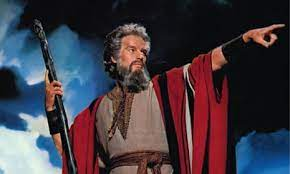
Moses has led the Israelites
from Egypt into the wilderness. They have been there for many years and in
chapter 11 of Numbers we are told that the people complained in the hearing of the Lord about
their misfortunes, Numbers 11:1 God was angry, and his anger was
kindled. Then the fire of the Lord burned against them,
and consumed some outlying parts of the camp. Numbers 11:1
Moses intervened and God’s anger subsided. But people still complained.
4 ‘If only we had meat to eat! 5 We
remember the fish we used to eat in Egypt for nothing, the cucumbers, the
melons, the leeks, the onions, and the garlic; 6 but
now our strength is dried up, and there is nothing at all but this manna to
look at.’
Once again God
became angry. But this time Moses has also had enough. He is at his wits end. He
has been faithful to God, he has led the people out of slavery in Egypt, he has
been leading them through the wilderness as God directed. But the people still
moan and complain.
10 Moses heard the people weeping throughout their
families, all at the entrances of their tents. Then the Lord became
very angry, and Moses was displeased.
Moses was
displeased. What an understatement. He is fed up with the people moaning and groaning.
(How many church leaders can relate to this I wonder?) But Moses is also displeased
with God.
11 So
Moses said to the Lord, ‘Why have you treated your servant so badly?
Why have I not found favour in your sight, that you lay the burden of all this
people on me? 13 Where am I to get meat to give to
all this people? For they come weeping to me and say, “Give us meat to
eat!” 14 I am not able to carry all this people
alone, for they are too heavy for me. 15 If this is
the way you are going to treat me, put me to death at once—if I have found
favour in your sight—and do not let me see my misery.’
Understanding
Moses’ exhaustion, the Lord decides to act. And in doing so God demonstrates to
Moses and to us something really important. If we try to respond to the crying
of the needs of the world as individuals, we will soon find ourselves in
despair.
God tells Moses
to choose seventy people among the elders of Israel to help Moses carry the burden
of leading the people. God then gives these elders some of the spirit that God
has given Moses to enable them to fulfil their leadership roles.
The Holy Spirit
means we do not have to carry a burden on our own. The Pentecost experience and
the gift of the Holy Spirit mean that we always have a guide willing to lead
and always be present in every circumstance. (Church Leaders take note – we do
not have to carry everything on our own. Though I accept that’s easier said
than done sometimes.)
Having chosen his
seventy elders, and the seventy having been touched by the Holy Spirit, Moses
can now be assured that he is not on his own. There are others who can help him
lead the people of Israel.
Things are
looking better.
But then we are
told that the Spirit rested upon two men who had remained in the camp
26 one named Eldad, and the other named Medad,
And they too began to prophesy and in so doing take some the
weight from Moses.
Fair enough we might say. The Holy Spirit moves
where the Holy Spirit moves. However,
28
Joshua son of Nun, the assistant of Moses, one of his chosen men,[c] said, ‘My
lord Moses, stop them!’
Moses realises that Joshua is driven by jealousy and Moses refuses to do
as Joshua said. In fact, Moses says:
Would that all the Lord’s people were prophets, and
that the Lord would
put his spirit on them!’
Words that remind me of John Wesley
“Give me one
hundred preachers who fear nothing but sin, and desire nothing but God, and I
care not a straw whether they be clergymen or laymen; such alone will shake the
gates of hell and set up the kingdom of heaven on Earth.”
―
Of course,
Joshua’s jealous reaction is something many of us will have seen in church
life. Joshua may well have been motivated by a sense of possessiveness. He
didn’t want someone else taking over his turf. Sadly, in the life of the Church
how often do people put up barriers to keep others out so that they can keep
their own self-importance?
Or perhaps Joshua
just didn’t want someone else sharing the limelight with Moses and himself. Joshua
was Moses second in command and perhaps had a sense of taking on the role of
leader from Moses in due course. And he is protective of his position accordingly.
Again, in a church context often people are reluctant to share a leadership
role or even give it up so as not to lose the coveted public attention they
might receive when being the sole person in charge.
It is noticeable
that Moses doesn’t react that way. He doesn’t seem to mind that others are now
in leadership positions with him. Nor does he object when God took some of the
spirit that was on Moses and put it on the seventy elders;
We could easily
interpret this as meaning that Moses gave up some of his authority when some of
God’s spirit was taken from him.
It would be a
very human reaction. We who have been given much of something want to hold on
to it. We do not wish it to be shared. We do not wish to relinquish it. It
explains how some nations are more abundant than others. It explains how the rich
get richer and the poorer get poorer.
If we apply this
understanding to our spiritual resources, we can believe there is only so much
to go around and therefore we must protect what we have as we wouldn’t want to
lose it all. With this mindset churches become selfishly protective of their resources
whether that is financial resources or people.
Moses wasn’t
diminished when some of God’s spirit was taken from him. I think a good way of
thinking about this is – that the gift of the spirit is like the gift of
wisdom. When a person shares wisdom the act of sharing that wisdom take nothing
away from the giver. Rather it is a like using one candle to light another
candle. The first candle doesn’t lose its light because it shares with a second
candle. In fact, the light becomes brighter through the sharing.
In taking his
spirit from Moses I think we can see it as God sharing the wisdom and
experience Moses has gained with the seventy who in turn will pass this on to
others. When leaders share their skills, authority and resources with others,
this does not diminish their effectiveness. Rather it enhances it. And in the
sharing the community grows in its own wisdom and skills too.
This is a slightly abridged version of a sermon preached at Pentecost 2023 at Central Methodist Chippenham.
I am grateful for the resources of Feasting on the Word which inspired this sermon

