In the images you will find a letter I've written today to the churches in the North Wiltshire Methodist people.


In the images you will find a letter I've written today to the churches in the North Wiltshire Methodist people.

I was first introduced to
Shakespeare by my English teacher Mrs Grocott. This was at Cwmcarn Comprehensive
back in the late 1970s and for “O” level English literature we studied the
Merchant of Venice. I had a difficult relationship with English Literature as a
subject. I enjoyed the plays (we also studied An Inspector Calls by J. B.
Priestly and She Stoops to Conquer by Oliver Goldsmith). But the novels didn’t
do much for me (one was The Pearl by John Steinbeck) and as for the poetry. It
left me cold. So much so that I failed my O level.
But as I’ve said Mrs Grocott
introduced me to Shakespeare and for that I’m grateful.
If you’ve never seen the
Merchant of Venice, what follows contains spoilers.
Compared to some Shakespeare
plays on the face of it the Merchant is an easy one. The story, or should that
be stories, are straightforward. Bassanio, a young Venetian of noble rank, wishes to woo the beautiful and wealthy
heiress Portia of Belmont. But he’s
squandered all his money. So, he asks his friend Antonio – the Merchant of the
title – for a loan. Antonio’s assets are all tidied up in various trading
ships. He’s asset rich and cash poor. Nonetheless he agrees to help Bassanio
and Antonio goes a to a Jewish money lender – Shylock – for a loan.
But the loan comes with a heavy price. If
Antonio defaults Shylock wants from Antonio
an equal pound
Of your fair flesh, to be cut off and taken
In what part of your body pleaseth me.
Antonio agrees
thinking all will be well when his ships come back to port. But they don’t, and
Shylock calls in the loan. Antonio and Shylock go to court for Shylock to have
his penalty clause enforced. Shylock wants his “pound of flesh” which in
reality means Antonio will be killed.
At this point
in the play Shakespeare uses one of his tried and tested plot devices – women disguised
as men. In this instance Portia, who is now Bassanio’s wife, disguises herself
as a lawyer brought in to advise on the law. She concludes that the contract is
valid and yes Shylock is entitled to his
pound of flesh. However, she points out that there is nothing in he contract
about any of Antonio's blood being shed. Therefore, Shylock can only have his
pound of flesh if no blood is spilled in the taking of the pound of flesh.
Bassanio
offers Shylock the money for the loan which Shylock reluctantly agrees to
(having previously refused and insisted on the pound of flesh.) But Portia also
prevents Shylock from doing this, on the ground that he has already refused it
"in the open court". She cites a law under which Shylock, as a Jew
and therefore an "alien", having attempted to take the life of a
citizen, has forfeited his property, half to the government and half to Antonio, leaving his life at the mercy of
the Judge.
Shylock
is bankrupted and the play ends happily ever after with Bassanio and Portia
happily married and Antonio alive. (OK, there’s more to it than this. DO NOT
rely on this blog as an aid to revision.)
For many years the play has come under scrutiny
for antisemitism. Certainly, it can be interpreted that way from the way
Shylock is treated and referred to. And in some productions Shylock has become a
caricature of a Jew. (In Nazi Germany the Merchant of Venice was staged this
way.)
However, Shylock can be portrayed in other
ways. He can be portrayed as a sympathetic character. A Jew who is persecuted
for his faith and is pushed to breaking point by anti-semites because of his
faith.
Early on in the play Shylock is challenged
about why he wants a pound of flesh from Antonio. Shylock says:
“… it will feed my revenge. He hath
disgraced me, and
hindered me half a million;
laughed at my losses,
mocked at my gains, scorned my
nation, thwarted my
bargains, cooled my friends,
heated mine
enemies; and what's his
reason? I am a Jew.”
And this brings me to a production of the Merchant
of Venice by the Roal Shakespeare Company at Stratford on Avon. It was entitled
“The Mercnat of Venice 1936” and the actor and writer Tracy Ann Oberman
appeared as Shylock. It was set in the East End of London in 1936 at the time
of the rise of Oswald Mosely’s fascist Black Shirts.
Shylock was portrayed as a hard businesswoman. But
one who has been pushed to demand his pound of flesh, as revenge for the way Antonio
and his Black Shirt wearing friends had treated him and other Jewish people. (And let’s not forget, was Shylock really
expecting he’d get his revenge? What were the chances of all of Antonio’s
fortunes being lost at sea?)
Even “fair Portia” was portrayed as antisemitic.
Initially, in the way Portia treated Shylock’s daughter Jessica (who had eloped
with the Christian Lorenzo taking some of Shylock’s wealth with her.) Then at
court. (Portia was portrayed as someone like Lady Diana Mitford - wife of
Moseley, and in her own right a fascist and Hitler sympathiser.) In this
production by what might be termed “the establishment” joins forces to even
deny Shylock justice in a court of law. No separation of powers here. (As an aside,
just a few days after seeing this production, the Conservative MP Jacob Rees –
Mogg demanded that courts no longer be separate but should be subject to
Parliament. https://www.lawgazette.co.uk/news/popular-conservatives-rees-mogg-attacks-lady-hale-and-calls-for-neutering-of-supreme-court/5118671.article)
I am writing this not a review of the play
(which was excellent by the way with Ms Oberman on top form.) But because I was
affected by words of Shakespeare said by Shylock.
It is a continuation of the speech I’ve quoted
earlier:
Hath not a Jew eyes? hath not a Jew
hands, organs,
dimensions, senses,
affections, passions? fed with
the same food, hurt with the
same weapons, subject
to the same diseases, healed
by the same means,
warmed and cooled by the same
winter and summer, as
a Christian is? If you prick
us, do we not bleed?
if you tickle us, do we not
laugh? if you poison
us, do we not die? and if you
wrong us, shall we not
revenge? If we are like you in
the rest, we will
resemble you in that. If a Jew
wrong a Christian,
what is his humility? Revenge.
If a Christian
wrong a Jew, what should his
sufferance be by
Christian example? Why,
revenge.
Words reminding us that all
people are the same regardless of their race, their faith, their gender or sexuality.
Whether Israeli or Palestinian.
As a sixteen year old this
was one of the many quotes from the play we had to memorise and regurgitate. It
is one that stuck – though at the time I’m not sure I realised the importance
of it. I do now.
This production will
transfer to the West End on 15th February. If you can go and see it.

The Book of Deuteronomy is a
second giving of the law to Moses. The law is given immediately prior to the
crossing of the river Jordan and Israel’s entry into the land promised to its
ancestors, Abraham, Isaac, and Jacob. It is a second giving as the first giving
was set out in the terms of the covenant concluded between Moses and God on
Mount Sinai, on behalf of the people of Israel, immediately after their
delivery from slavery in Egypt.
In Deuteronomy Moses is
fleshing out the law already given.
One of the themes that emerges
from Deuteronomy is that once the people of Israel have finally crossed the
Jordan, the leadership of Israel would be made up of four distinct groups –
Kings, Judges, Priests and Prophets. And in the next few books of the Old
Testament, the Hebrew Bible, we see these groups featuring.
But this morning I want us
to think about one of those groups, the prophets.
Broadly speaking from this
time onwards, and as the people entered the promised land, prophets figured
largely. We only have to look at the Hebrew Bible to see them – great prophets such
as Elijah, Isaiah and Jeremiah, then Daniel and Ezekiel; and others who are
termed “minor prophets” such as Amos, Hosea and Micah.
Prophets consistently, and
regularly, appeared. They were often – though not always – charismatic,
eloquent speakers and preachers. To outsiders and opponents, prophets appeared
to be self - appointed speakers, but to their followers they were seen as God - appointed revealers of truth.
Prophets were generally held
in high regard because they shared truth from God alone. They presented
themselves as the very mouth of God to speak to Israel.
But throughout the time of
the prophets there was an important bench mark. And that is what Moses said in
Deuteronomy 18:15
15 The Lord your God will raise
up for you a prophet like me from among you, from your fellow
Israelites. You must listen to him. Deuteronomy 18: 15
raise up for you a prophet like me
In other words, for a prophet to be regarded as authentic,
the prophet needed to be “like Moses”. They had to be native Israelites and the
important part being that prophets must be like Moses, meaning that the
teaching of a prophet must accord with the words and spirit of Moses.
13 When Jesus came to the
region of Caesarea Philippi, he asked his disciples, “Who do people say
the Son of Man is?”
14 They replied, “Some say John
the Baptist; others say Elijah; and still others, Jeremiah or one of the
prophets.”
Though
when Jesus presses Peter
15 “But what about
you?” he asked. “Who do you say I am?”
16 Simon Peter answered, “You
are the Messiah, the Son of the living God.”
The words of Moses point to
Jesus who was greater than a prophet of course.
Though interestingly in his
gospel John draws several analogies between Jesus and Moses. But that’s for
another time.
What is a prophet?
Chambers dictionary tells us
that a prophet is “someone who speaks on behalf of a deity; Someone who
proclaims a divine message; an inspired teacher, preacher or poet; Someone who
speaks on behalf of a group, movement or doctrine; A foreteller, whether
claiming to be inspired or not;”
That’s what a prophet is.
But Where are the prophets now? Or did God stop using prophets after
Jesus? Well clearly not. We might refer to the likes of Paul as an Apostle but
he proclaimed a divine message. And over the centuries countless other Christians
have been prophetic too.
The trouble is I feel we
tend to associate prophets with the dramatic. And in our age sadly many of
those who claim to be prophets are no such things. For example you may have
seen some news reports a few weeks ago about Pastor T B Joshua who ran a mega
church in Lagos Nigeria. He claimed to be a prophet but his “ministry” involved
the sexual abuse of many vulnerable women.
I like something American minister
Jeremiah Wright of the Trinity United Church of Christ in a run down area of
Chicago said “There ain’t no prophet in the written record who is a pastor
of a megachurch”.
It's worth remembering once
again those words spoken by Moses
15 The Lord your God will raise
up for you a prophet like me
Prophets must be like Moses. And I would add as
Christians, we should expect prophets to share the message and values of Jesus Christ.
Being like Moses, or being like Christ, means that a prophet’s words must be
like the words and spirit of Moses and Jesus.
Where are the prophets?
I suspect there are few here
this morning old enough to remember Simon & Garfunkel’s song “The Sound of
Silence”. If you do remember it that song contained a line “The words of the
prophets are written on the subway walls”. I don’t know what Simon & Garfunkel
meant by that line. But for me it has been an indication that we can find words
of prophecy in unlikely places and spoken by unlikely people. In other words,
God can speak to us in ways we may find unlikely, through people we may find
unlikely. After all, he spoke to Moses through a burning bush which is hardly a
normal form of communication – even back then!
I would suggest that God can
sometimes use people to be prophets even if they don’t know it. You may have
views on the climate emergency affecting the world now. But someone like Greta Thunberg
I’d suggest is a prophet. She brings a message that is a reminder from God that
we as his people are custodians of his planet. Likewise Sir David Attenborough whose
Blue Planet programme featuring plastic waste in the oceans did so much to
raise this issue.
And talking of the words of
the prophets on subway walls, the artist Banksy’s paintings have often said so
much. Such as this one in the West Bank of Palestine:

But if we accept that
prophets can be unlikely people, in unlikely places and at unlikely times, how
do we determine if someone really is bringing us a word from God? A God - given
insight?
As Jesus says in
Matthew 7
15 “Watch out for
false prophets. They come to you in sheep’s clothing, but inwardly they
are ferocious wolves. 16 By
their fruit you will recognize them. Do people pick grapes from
thornbushes, or figs from thistles?
We go back to the words of Moses
in Deuteronomy God will raise up for you a prophet like me. Is the “prophet”
speaking in manner that is compatible with Moses or more importantly compatible
with Jesus? That is the test.
The second factor for acknowledging a true
prophet, as far as the passage in Deuteronomy is concerned is whether the prophet’s
messages should be proved true by the actual outcome of events.
21 You may say to
yourselves, “How can we know when a message has not been spoken by the Lord?” 22 If what a prophet proclaims in the name of
the Lord does not take place or come true, that is a message
the Lord has not spoken. That prophet has spoken
presumptuously, so do not be alarmed.
Of course this is
rather unhelpful; since prophecies might take the form of warnings, it may be
of little assistance to find that such warnings were true when it was too late
to heed the message!
Didache, a short book on
Christian behaviour and church practice from the 2nd century tell us “The
false and the genuine prophet will be known by their ways. If a prophet teaches
the truth but does not practise what he teaches, he is a false prophet.”
But what of now? Where are
the prophets now?
Antoinette Doolittle 19th century American writer said:
“every time has its prophets as guiding stars;
They are the burning candles of the Lord to light the spiritual temple on
earth, for the time being. When they have sown their work they will pass away;
But the candle sticks will remain, and other lights will be placed on them.”
Who replaces the prophetic
candles that have burned out? Who takes their place on the prophetic candlesticks?
Where are the prophets? Look
around you. Here are the prophets. Each one of us can be prophetic. We can and must speak of Christlike values. We can and must voice our concerns at injustices.
As Christians we are called
to be prophetic. To speak into the age we live in. To speak up for the values
of Christ and challenge those things and values that aren’t Christ like.
Cardinal Basil Hume
Archbishop of Westminster once said:
“whenever the poor are afflicted or
neglected, or whenever human freedom and dignity is not respected, then the
church has a duty to sound a prophet’s note, and it must be prepared to be
unpopular on matters which concern politicians as well.”
Where are the prophets?

The Christmas story begins in darkness. There was the darkness of
oppression, for God's people were a conquered people. They were a beaten and a
defeated people. There was the darkness of persecution. Indeed, it was a despised
universal taxation that brought the participants in the story together on that
fateful night. There was the darkness of disillusionment. There was an
ever-increasing number who felt that violence, not faith, was the most
effective path. Yes, on that first Christmas, the mood was one of despair and
resignation.
And thus, it was then and thus it is now. We too live in a world
of darkness. There are wars and rumours of wars, hunger and unemployment,
racism, loneliness, and a sense of emptiness. I don't have to tell any of you
about the darkness, because in one form or another, at one time or another, it
has touched the life of each person here. We all know about darkness. We might
think the Bible would reassure us. But it confirms there is darkness and will
be darkness at times in our lives.
But it also tells us that there is a light at the end of the
tunnel. The prophet Isaiah wrote, “people who walk in darkness have seen a
great light.” John’s Gospel records: The light shines in the darkness
and the darkness has not overcome it. So we come together to sing again the
words: Yet, in thy dark street shineth the everlasting light.
O little town of Bethlehem
was written in 1868 by the Rector of Holy Trinity Church Philadelphia Phillips
Brooks. He was inspired to write it following a visit to the Holy Land three
years earlier, when, on Christmas Eve he had stood on the traditional spot of
the shepherds’ fields and looked out over Bethlehem. Afterwards he’d joined in
a five-hour church service and had been captivated by the powerful singing.
He wrote:
“I stood in the old church
close to the spot where Jesus was born. The whole church was ringing hour after
hour with splendid hymns of praise to God. It seemed as if I could hear voices,
I knew well telling each other of the wonderful night of the Saviour’s birth.”
The words of the carol
capture the Christian truth that Bethlehem became a meeting place for all human
longings (“the hopes and fears of all the years are met in thee tonight.”)
And God’s response to human concerns is through giving us Jesus (“the
wondrous gift”). And yet Earth remains silent and unaware of the enormity
of what is happening. It seems that only the stars in the night sky and the
angels know what is going on (“O morning stars together proclaim the holy
birth”; “we hear the Christmas angels”).
The carol breathes silence
and stillness. It asks to be sung in hushed reverential tones. After all we are
told most people are sleeping and the streets are silent. But the arrival of
God on earth in the person of his son Jesus causes the silent stars to break
into song. Jesus, the holy child, the dear Christ – that is our saviour, is the
wondrous gift. He is Emmanuel which means God with us.
“O little town of Bethlehem”
tries to capture the mystery and meaning of what was happening on that first
Christmas. The first Christmas begins in a specific geographical location – Bethlehem.
But it ends in a spiritual place – our hearts. “So God imparts to human
hearts the blessings of his heaven”.
But were Phillips Brooks to
visit Bethlehem this year he would find it a very different place. For the
Christmas celebrations this year will be muted. There will be no Christmas
lights in Bethlehem this year. I’m not sure the old church he spoke of will be
ringing hour after hour with splendid hymns of praise to God.
A few weeks ago the Catholic
newspaper The Tablet reported that:
“The main
churches in Bethlehem have agreed to cancel all non-religious Christmas
celebrations this year in protest at the violence in Gaza, where deaths have
reportedly passed 11,000.
The town,
which lies six miles from Jerusalem in the occupied West Bank, will only host
religious ceremonies, with the annual nativity scene and Christmas tree deemed
“inappropriate”.
The Patriarchs
and Heads of the Churches in Jerusalem called upon the faithful to forgo any
“unnecessarily festive activities” during the Christmas season this year and to
“stand strong” with those facing the afflictions of war.”
Inevitably
some have seen this as supporting Hamas. But I think that is wrong. The church
leaders in Jerusalem have made it quite clear they are calling for peace. And
calling for peace should not be seen as taking sides. The atrocities committed
by Hamas in October were horrific. But whatever the right and wrongs of what
the Israelis are doing in Gaza, undoubtedly innocent people are being injured
and killed.
To remember all those who have died in
the Israel/Palestine conflict, Methodist churches across the country were
called upon to leave their second Advent candle unlit this year.
The call not to light the candle, which
represents peace, on the second Sunday in Advent (10 December) and on
subsequent Sundays, follows the news that celebrations to mark Christmas in the
Holy Land will be subdued this year.
The Revd David Hardman,
Methodist Liaison Officer, Jerusalem, is currently fulfilling his
role from the UK and remains in touch with those living in the Middle
East. David explained, “Our Christian colleagues in Bethlehem tell us
that this Advent and Christmas the lights that normally adorn the birth place
of Jesus will remain unlit in memory of those who have been killed in the
current conflict. We are inviting Methodist churches in Britain to leave the
second candle of Advent unlit to serve as a reminder that we stand in
solidarity with all who are suffering in the Holy Land.”
I had my misgivings about this. I understood fully the need
to stand in solidarity. But to me our message is about Christ the Light of the
World coming into the darkness.
The good news of Christmas is that in the midst of a deep darkness
there came a light, and the darkness was not able to overcome that light. It
was not just a temporary flicker. It was an eternal flame. “Yet in the dark
street shineth and everlasting light” We need to remember that. There are
times, in the events of the world and in the events of our own personal lives,
that we feel that the light will be snuffed out. But the Christmas story
affirms that whatever happens, the light still shines.
We need to hear these words this Christmas as the families of war-torn
Israel both Jewish and Palestinian are overwhelmed with grief. We need to hear
these words as the families of Ukraine and Russia are suffering this season.
The darkness is real. But because of Christmas, it will never get so dark that
you can't see the light. Into the darkness God sent an eternal light.
As you walk outside this evening, notice that the darkness does
not intrude upon the light. On the contrary, it is the light that intrudes upon
the darkness. Light is always stronger than darkness. And the forces of light
are stronger than the forces of darkness.
The greatest need in our mixed up and confused world this day is
to let people know that there is hope. That life is worth living no matter
what. We should not be discouraged to the point of despair. In Jesus Christ we
shall cling to the hope that life overcomes death, that love conquers hate, and
that truth will prevail over falsehood. We are the people of light, and we must
share that light in a dark and a dreary land.
Why do you think that God chose to use a star to guide the Wisemen
to Bethlehem? I am convinced that it was not by accident. It was an eternal
reminder to them and to us that in a sea of darkness, it is the light that
keeps us going forward. It is the light of hope and the light of Christ that
leads the way and dispels the gloom. It is my prayer that the light of
Christmas will shine and enlighten the dark corners of your life and that you,
too, will discover the pathway to Bethlehem.

One of the consequences of what
happened was I became disabled. The blood supply to my right leg was interrupted
and I had a deep vein thrombosis. The nerves in the right leg became damaged
and have never fully recovered. Therefore I am left with limited movement in
the right leg. It’s no longer much a of an issue. It was it is.
I now walk with two sticks. Well
I should say when I am out and about. Bearing in mind I can’t walk far anyway,
outside I use two sticks as it feels safer. I can manage indoors with one stick
and this dear reader brings me to the subject of this blog.
We’ve recently been on holiday in
France. We were staying in a lovely house on the Normandy coast near the small
town of Port Bail.
One evening as I was getting
ready for bed, as part of my nightly routine I went to retrieve my walking
sticks. You see dear reader at home I get round the house either with one stick, usually (but not always) leaving the spare stick propped up in the hall.
However, sometimes I can manage without a stick – think of toddlers learning to
walk by moving from one piece of furniture to the other and you get the idea. This
then means come bedtime when I need one stick to go upstairs there can be a
game of “hunt the other walking stick" if I've not left the spare in the hall.
I got into a similar pattern in
France. Therefore, this particular evening heading for bed, I went to retrieve both
sticks to take both with me so I knew where they were. But I could only
find one. I looked around the house in the places I might have left the other
one – the bathroom, the kitchen, on the patio, - and I couldn’t find it. No problem I must have
left it in the car. I remembered helping carrying some shopping from the car
that afternoon. I must have left one stick behind so that I had a free hand,
A beautiful late summer morning
dawned, and I set off in the car to go the boulangerie to get bread and croissants for
breakfast, as you do in France. I opened the car expecting to find the other
stick but it wasn’t there. Mysteriuex (or should it be mysterieuse?)
Coming back to the house I realised
that I must have left the other stick at the Casino.
Now, before you all clutch your
pearls, and have a fit of the vapours at the thought of a Methodist minister
being in a Casino, I should explain. The small super market in Port Bail is run
by a company called Casino. (I think possibly because it’s a gamble whether you’ll
find what you want.) We’d been to the Casino the previous afternoon. I vaguely remembered
leaving stick number 2 at the check out propped up as I helped unload the
shopping trolley.
To my shame, my French is
limited. I didn’t pass O level French. We didn’t speak much with the focus on
reading and writing. Consequently I have quite a good vocabulary and can read fairly
well. But that’s it. As a result I wasn’t sure of the French for “I think I left
my walking stick here yesterday”. Google is our friend and I was told the
phrase is “Je pense que j’ai laisse ma canne ici hier”.
On previous visits to the Casino one of the young men on the checkouts spoke pretty good English so of course I was hoping he’d be there when I went back. Non. There was another young chap. Oh well. “Bonjour monsieur. Je pense que j’ai laisse ma canne ici hier” I proclaimed in my best Officer Crabtree French accent. He looked blankly at me. Resisting the urge to explain very loudly in slow English, I tried again. “Je pense que j’ai laisse ma canne ici hier”. Another blank look. Conscious of the queue of bewildered French people behind me, I showed the young man the screen shot of the phrase on my phone. The light dawned. Une epiphanie.
Off he went to hunt for the
stick. Firstly searching for it under a pile of boxes for customers to use for their
groceries. Then disappearing into a back office. Both with no luck. Oh well. Comme ci comme ca. “Merci for trying”.
But then. What is this sticking
out from a shelf near his checkout? Une canne! Voila! Incroyable!
The young man proudly presents me
with the walking stick. Tears swelling in his eyes. The crowd behind me
applauding! La Marseillaise playing over the Casino loud speaker system.
I don’t have the heart to tell
him – or indeed the French – that this wasn’t my stick. But anyway c’est la
vie. Never mind at least I have two sticks. (And the French stick is
adjustable like my own. It even looks similar.)
But of course now I feel slightly
guilty. What if a French person comes in looking for their stick and I have
taken it? Well it is a Casino. It’s the luck of the draw, la chance de
tirage au sort as I believe they say.
Two days later my wife is hoovering
in the sitting room of the house. She lifts the cover of the sofa and what does
she find? My missing stick. Yes dear reader. It wasn’t in the Casino at all. It was hiding beneath the sofa. Sous la canape. (Who knew the French had taken the word we use to describe little tasty bits of food to describe a sofa?)
Now I have three sticks and even
more guilt. In my mind I see an old French lady hobbling along la rue using
a stale baguette as a stick, accompanied by the music of Jean de Florette.
I must do something. I return to
the Casino.
If my French wasn’t up to asking
if they’ve found my stick, it certainly isn’t up to explaining “I was here a
couple of days ago as I thought I’d lost my stick. You gave me a stick but it
wasn’t the right one. Anyway I now have found my stick elsewhere so I am bringing
the French stick back.”
I hatch a cunning plan. A ruse
du guerre if you will. I will go into the Casino and “accidentally”
leave the French stick behind.
I wander in. “Bonjour mesdames et monsieurs” lifting mon chapeau. I casually approach les fruits et legumes section and browse the selection of pommes and pommes de terre, before nonchalantly leaning the French stick up against the counter. I glance around. No one is watching and I wander off, British stick in one hand, French stick left behind and head for the sortie. Mission accomplie.
NB I know some of the French spelling should have accents. But I'm not sure how to access those on my clavier d'ordinateur

A
few years ago, a friend of ours, Liz, was 50. As part of her celebrations Liz
set herself the challenge of walking around the Imber Range Perimeter path on
Salisbury Plain. It is 30 miles long. But Liz decided to do it in sections and
invited friends to join her to walk a section and then go a for a meal
afterwards. On one particular day my wife Anne and I agreed to meet Liz. At
last minute Anne couldn’t get out of work so Liz and I set off from Tilshead to
Bratton. I have very fond memories of that day. (It proved to be the last
occasion I was able to do such a walk due to my subsequent illness.)
Liz
and I tramped along chatting about this and that. Stopping every now and again
to admire the view or take a photo.
Towards
the end of the walk, I stopped and said “Ooh. I can hear a train. It’s a
Class 66”. (I need to explain that a Class 66 is a type of engine that
pulls freight. And they have a distinctive sound.) Liz smiled and said, “I
didn’t realise you liked trains too.”. Since then to Anne’s bemusement, Liz
and I occasionally talk trains and model railways. (Though in my defence Liz is
more of a train geek than I am*.)
The
reason I mention this is that Liz, Anne and I had known each other for quite
some time but until that walk, and my (correctly) identifying a Class 66, Liz
and I did not know we had this railway thing in common.
I
can’t help but wonder how often followers of Jesus don’t talk about their faith
to others? To be evangelists?
Evangelism has
unfortunately become a dirty word to many people. People know it exists, but
they associate it with old fashioned tent revival meetings, street preachers
and fundamentalists.
This is unfortunate
because at its heart evangelism is the work of those who are the messengers of
good news. The word “Evangelist” itself has the same roots as “angel”.
And surely if ever there was a time for people needing good news it is now?
In Paul’s letter to the Romans,
we read these words:
14 How can people have faith in the Lord
and ask him to save them, if they have never heard about him? And how can they
hear, unless someone tells them? 15 And how can anyone
tell them without being sent by the Lord? The Scriptures say it is a beautiful
sight to see even the feet of someone coming to preach the good news. Romans 10: 14 – 15 CEV
So go on. Be ready to
mention your faith. It can’t be half as embarrassing as admitting you’re a
train geek!
* The fact that I have a model Class 66 on my bookshelf and Liz recently gave a me a book about Class 66 engines as an early birthday present does not mean I'm a geek.

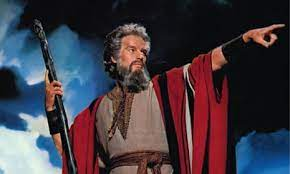
Pentecost 2023
We think of Pentecost as the
day we think of the coming of the Holy Spirit through a mighty wind, of
speaking in tongues, being on fire with energy and love of God or even of
acting as if drunk! These are all things we hear in the story of Pentecost in
Acts. Consequently, that’s how we tend to think of Spirit filled people
behaving or being.
But today I want us to look
at a passage from the Book of Numbers Numbers: 11: 24 –
30 as the passage shows us how God’s Spirit can work in
other ways too.
In order to get to grips
with the passage, we need to look a bit further back in the story.
Moses has led the Israelites
from Egypt into the wilderness. They have been there for many years and in
chapter 11 of Numbers we are told that the people complained in the hearing of the Lord about
their misfortunes, Numbers 11:1 God was angry, and his anger was
kindled. Then the fire of the Lord burned against them,
and consumed some outlying parts of the camp. Numbers 11:1
Moses intervened and God’s anger subsided. But people still complained.
4 ‘If only we had meat to eat! 5 We
remember the fish we used to eat in Egypt for nothing, the cucumbers, the
melons, the leeks, the onions, and the garlic; 6 but
now our strength is dried up, and there is nothing at all but this manna to
look at.’
Once again God
became angry. But this time Moses has also had enough. He is at his wits end. He
has been faithful to God, he has led the people out of slavery in Egypt, he has
been leading them through the wilderness as God directed. But the people still
moan and complain.
10 Moses heard the people weeping throughout their
families, all at the entrances of their tents. Then the Lord became
very angry, and Moses was displeased.
Moses was
displeased. What an understatement. He is fed up with the people moaning and groaning.
(How many church leaders can relate to this I wonder?) But Moses is also displeased
with God.
11 So
Moses said to the Lord, ‘Why have you treated your servant so badly?
Why have I not found favour in your sight, that you lay the burden of all this
people on me? 13 Where am I to get meat to give to
all this people? For they come weeping to me and say, “Give us meat to
eat!” 14 I am not able to carry all this people
alone, for they are too heavy for me. 15 If this is
the way you are going to treat me, put me to death at once—if I have found
favour in your sight—and do not let me see my misery.’
Understanding
Moses’ exhaustion, the Lord decides to act. And in doing so God demonstrates to
Moses and to us something really important. If we try to respond to the crying
of the needs of the world as individuals, we will soon find ourselves in
despair.
God tells Moses
to choose seventy people among the elders of Israel to help Moses carry the burden
of leading the people. God then gives these elders some of the spirit that God
has given Moses to enable them to fulfil their leadership roles.
The Holy Spirit
means we do not have to carry a burden on our own. The Pentecost experience and
the gift of the Holy Spirit mean that we always have a guide willing to lead
and always be present in every circumstance. (Church Leaders take note – we do
not have to carry everything on our own. Though I accept that’s easier said
than done sometimes.)
Having chosen his
seventy elders, and the seventy having been touched by the Holy Spirit, Moses
can now be assured that he is not on his own. There are others who can help him
lead the people of Israel.
Things are
looking better.
But then we are
told that the Spirit rested upon two men who had remained in the camp
26 one named Eldad, and the other named Medad,
And they too began to prophesy and in so doing take some the
weight from Moses.
Fair enough we might say. The Holy Spirit moves
where the Holy Spirit moves. However,
28
Joshua son of Nun, the assistant of Moses, one of his chosen men,[c] said, ‘My
lord Moses, stop them!’
Moses realises that Joshua is driven by jealousy and Moses refuses to do
as Joshua said. In fact, Moses says:
Would that all the Lord’s people were prophets, and
that the Lord would
put his spirit on them!’
Words that remind me of John Wesley
“Give me one
hundred preachers who fear nothing but sin, and desire nothing but God, and I
care not a straw whether they be clergymen or laymen; such alone will shake the
gates of hell and set up the kingdom of heaven on Earth.”
―
Of course,
Joshua’s jealous reaction is something many of us will have seen in church
life. Joshua may well have been motivated by a sense of possessiveness. He
didn’t want someone else taking over his turf. Sadly, in the life of the Church
how often do people put up barriers to keep others out so that they can keep
their own self-importance?
Or perhaps Joshua
just didn’t want someone else sharing the limelight with Moses and himself. Joshua
was Moses second in command and perhaps had a sense of taking on the role of
leader from Moses in due course. And he is protective of his position accordingly.
Again, in a church context often people are reluctant to share a leadership
role or even give it up so as not to lose the coveted public attention they
might receive when being the sole person in charge.
It is noticeable
that Moses doesn’t react that way. He doesn’t seem to mind that others are now
in leadership positions with him. Nor does he object when God took some of the
spirit that was on Moses and put it on the seventy elders;
We could easily
interpret this as meaning that Moses gave up some of his authority when some of
God’s spirit was taken from him.
It would be a
very human reaction. We who have been given much of something want to hold on
to it. We do not wish it to be shared. We do not wish to relinquish it. It
explains how some nations are more abundant than others. It explains how the rich
get richer and the poorer get poorer.
If we apply this
understanding to our spiritual resources, we can believe there is only so much
to go around and therefore we must protect what we have as we wouldn’t want to
lose it all. With this mindset churches become selfishly protective of their resources
whether that is financial resources or people.
Moses wasn’t
diminished when some of God’s spirit was taken from him. I think a good way of
thinking about this is – that the gift of the spirit is like the gift of
wisdom. When a person shares wisdom the act of sharing that wisdom take nothing
away from the giver. Rather it is a like using one candle to light another
candle. The first candle doesn’t lose its light because it shares with a second
candle. In fact, the light becomes brighter through the sharing.
In taking his
spirit from Moses I think we can see it as God sharing the wisdom and
experience Moses has gained with the seventy who in turn will pass this on to
others. When leaders share their skills, authority and resources with others,
this does not diminish their effectiveness. Rather it enhances it. And in the
sharing the community grows in its own wisdom and skills too.
This is a slightly abridged version of a sermon preached at Pentecost 2023 at Central Methodist Chippenham.
I am grateful for the resources of Feasting on the Word which inspired this sermon
